lunes, 1 de junio de 2015

How did we get here?

Ezra Pound               T.S Eliot    
While browsing for an interesting topic to write about, I found myself struggling with the lack of knowledge, except the lore nudged - or at least attempted to be nudged - into us during this course and some dissociated attempt to understand or give an "anclaje" to the former lore. Therefore, there is a gap, a wide scary gap that needs to be fulfilled somehow. One of those gaps is named Imagist writers, how it is connected with symbolism and how both connect to Elliot’s poetry.


F.S Flint. "The History Of Imagism."
The Egoist. London, 1 May 1995.
To start with, Imagist poetry advocates concreteness, economy, and free verse (1). That is, use words that do not almost depict the subject, but chisel it properly through words. Here appears a manifest, probably that of Ezra Pound - “A Retrospect” and “A Few Don’ts” (1918)- who was a leading figure within this branch of modernism. Furthermore, the relation between these writers, even though not that close, allowed Pound to modify Eliot’s Wasteland before publishing.

Some speculate that Imagism is the successor of the Symbolists and creates a parallel by contrasting the relation between music and symbolism and sculpture with Imagism (9). Others suggest that a great amount of influence can be traced to this movement, (Hughes 4-8) as well as there are others who do not avail for it (5) arguing the different nature of the French influence, pointing to psychologists and philosophers.

One thing is sure, Eliot was indeed interested in symbolists and his poems are filled with allusive directions and contrasts to which one needs to pay attention to, in order to grasp the full meaning of his creation.
Also, as stated by Eliot himself: “The kind of poetry that I needed, to teach me the use of my own voice, did not exist in English at all; it was only found in French." (8)

Elliot developed his style from the Symbolist as well as Metaphysical poets. From the latter, John Donne’s writing present a new perspective, using “paradoxical images, subtle argument, inventive syntax, and imagery from art, philosophy, and religion using an extended metaphor known as a conceit”
If now, you go to “The love song of J. Alfred Prufrock” most of what was mentioned can be found, adapted and fused to Eliot’s own nurtured imagery as vast as his education was. 

All in all, the modernity of Pound, his promotion of Eliot’s poems, and Eliot’s influences are only the beginning of an intricate chain of events that may lead towards unclosing the allusiveness employed while conveying his subject matter, in the concise, evoking manner of Imagists writers, differentiating himself only by his well-rounded pursuit of finding his voice. 

A little gift taken from Julian Peters' comic book adaptation of "The love song of J. Alfred Prufrock." 


Bibliography

(1)    Wilmer, Clive “Pound's Life and Career” Department of English, University of Illinois. MAPS: Modern American Poetry Sites. http://www.english.illinois.edu/maps/poets/m_r/pound/bio.htm  30 May 2015.

(2)    Hughes, Glenn. Imagism and the Imagists: A Study in Modern Poetry. 1931. Reprint, New York: Biblo and Tannen, 1972. 29 May 2015


A)     Leonard, William Ellery. ‘The New Poetry—A Critique, II’. Chicago Evening Post, 24 September 1915, p. 9. http://themargins.net/bib/A/05.htm
B)      BK. Ezra Pound (Index) Vorticism’. Fortnightly Review NS 96 (September 1914): 461-71. http://themargins.net/bib/B/BK/bk012.html

(4)     “Ezra Pound.” Academy of American Poets. http://www.poets.org/poetsorg/poet/ezra-pound 28 May 2015

(5)    Wallace, Martin. “The Sources of the Imagist Aesthetic” PMLA. Modern Language Association
http://www.jstor.org/stable/1261393?saveCitation=true&confirm=add&seq=1#page_scan_tab_contents

(6)    Bush, Ronald. “T.S. Eliot 's Life and Career Department of English, University of Illinois. MAPS: Modern American Poetry Sites. http://www.english.illinois.edu/maps/poets/a_f/eliot/life.htm

(7)    "Biography T.S Eliot." Harriet Monroe Poetry Institute. 29 May 2015. http://www.poetryfoundation.org/bio/t-s-eliot

(8)    “A Retrospect” and “A Few Don’ts” Harriet Monroe Poetry Institute.  29 May 2015 http://www.poetryfoundation.org/learning/essay/237886?page=1

(9)     "Imagism."  Modern & Contemporary American Poetry. 18 July 2007
 http://www.writing.upenn.edu/~afilreis/88/imagism-def.html  30 May 2015.
  

(10) Keep, Christopher ; McLaughlin, Tim; Parmar, Robin.  "Modernism and the Modern Novel." The Electronic Labyrinth. .  http://www2.iath.virginia.edu/elab/hfl0255.html

11)  "John Donne". Academy of American Poets 
http://www.poets.org/poetsorg/poet/john-donne 

Something Epic in Something called Poetry

I am the darker brother.
They send me to eat in the kitchen
When company comes,
But I laugh,
And eat well,
And grow strong.

Tomorrow,
I'll be at the table
When company comes.
Nobody'll dare
Say to me,
"Eat in the kitchen,"
Then.

Besides,
They'll see how beautiful I am
And be ashamed--

I, too, am America.

Anyone who read these lines can think that are just that, a couple of lines, however, they are more than words scattered randomly, they are actually the words of a hero, words which can be seen as the beginning of a new era, the era when Negros are the protagonists. These lines are poetry.


“Look how well a white man does things.” (Foundation, 2009)This phrase is simple and short, but it has a lot of meaning for a boy, and more for a black boy. The father of Hughes used to tell him this phrase, providing a lot of importance to the fact of being white, and putting this aspect in a higher position. Although any child could think of this as an example, or as a role model only for being better (understanding that for many people at those times, being white was correct or appropriated), Langton used this phrase to be a better man, a better black man.

At this point we can already talk about a hero, a man who suffers from discrimination, from violence and so on and so forth. But we can also talk about something epic. The epic is a vital contemporary art form, both in writing and in performance. (Margaret H. Beissinger, 1999) As it is established here, the epic has relation not only with performance, as Hughes demonstrated not only by thinking different from others, but also from his own father. Epic also has relation with writing, and he does not write about himself, he writes about crucial issues that are relevant in his life as a Negro, issues that are irrelevant for white people and society, but are important for an entire culture. The epic also has a peculiar and complex connection to national and local cultures. (Margaret H. Beissinger, 1999)

Moreover, when we talk about something epic, we immediately think of amazing events of history, like Troy war, World wars, and so on. However, is it epic something that it really was important and crucial, but it involved heroes who killed others to achieve victory?  Or can be epic something that through narrative and ideas changed others mind and help a culture to obtain the position that it deserves? Something that did not change the hero´s ideas and thoughts to accomplish the goal? From my perspective, that is something epic. Something that made changes by writing the true, by saying what people expected to hear, by giving voice to a movement. 


The narrative of Hughes has a voice, has true, and that is epic for me, an act of heroism when people tended to be afraid of saying what they thought, of dealing with what they believed as unfair. Epic poetry is defined as; “Poetic narrative of length and complexity that centers around deeds of significance to the community. These deeds are usually presented as deeds of grandeur or heroism, often narrated from within a verisimilitudinous frame or reference.” (Margaret H. Beissinger, 1999) So that, can the poetry of Hughes be considered epic poetry? Or can be his actions considered epic ones? 

Refferences
Foundation, P. (13 de october de 2009). Poetryfoundation.org. Recuperado el 29 de may de 2015, de Poetryfoundation.org: https://blogs.stockton.edu/hist2163/files/2014/09/The-Negro-Artist-and-the-Racial-Mountain-by-Langston-Hughes.pdf
Margaret H. Beissinger, J. T. (1999). Epic Traditions in the Contemporary World: The Poetics of Community. En J. T. Margaret H. Beissinger, Epic Traditions in the Contemporary World: The Poetics of Community (pág. 2). California: The regents of the University of California.


domingo, 31 de mayo de 2015

Yeats and the Irish Literary Revival


“On that afternoon in the west of Ireland in 1897, Lady Augusta Gregory, the wealthy widow of a County Galway landowner, and a shy, awkward poet from Dublin, William Butler Yeats, sat next to a roaring fire, looking out of large windows lashed by wind and rain, and decided that the time had come for Ireland to have its own theatre“ Felton, R. T. (2007)

At the end of the 19th century and the beginning of the 20th a movement that would change the history of Ireland’s literature emerged.
Tired of the way in which Irish peasants were being depicted in English theatre, there was a feeling arising, that Celtic culture could be more faithfully portrayed in a way that allowed the world to see how proud Irish people were of Ireland.
This movement has been has also been referred to as the Celtic Twilight, name adopted from the book under the same title by W. B. Yeats.
Yeats is probably one of the most important authors of this movement due to he and Lady Gregory founding the Irish Literary Theatre in 1899, which later originated the Abbey Theatre where many Plays by Irish writers would be performed by Irish actors. One of the most popular plays linked to this movement was actually written by Yeats and Lady Gregory: ‘Cathleen Ni Houlihan’, of which Yeats wrote in ‘The United Irishman’: “My subject is Ireland and its struggle for independence.”
When the idea began to take form, it seemed necessary to seek for supporters, people who were also willing and enthusiastic to give Ireland its own theatre so Lady Gregory claimed: "We will show that Ireland is not the home of buffoonery and easy sentiment as it has been represented, but the home of an ancient idealism. We are confident of the support of Irish people, who are weary of misrepresentation" Gregory (1972)


At the time, supporters to this movement used to frequent ‘An Stad’ (The Stop) which was a tobacco shop in Dublin mainly frequented by nationalists like Maud Gonne, and artists like Yeats or even James Joyce, whose writings also revolved around Ireland but not in the same idealistic way as Yeats’, as you probably know, Joyce’s Dubliners portrays Ireland as a place of paralysis and stagnation. The universe described in Dubliners has often been compared with the one in Yeats’ Stories of Red Hanrahan; Joyce is very time-and-place specific, whereas Yeats only informs the reader that the stories take place in rural Ireland.

I would say that it is rather clear how Joyce tries to pronounce a realistic judgment when describing Dublin, while Yeats romanticizes the mystical Irish traditions. In my opinion they are different perspectives but both brilliant in their own way and it is so interesting to contrast the feelings that you are left with when reading Dubliners with mysterious scenery in The Stories of Red Hanrahan.
Finally, I would like to invite you to read The Stories of Red Hanrahan, particularly The Twisting of the Rope and Hanrahan And Cathleen The Daughter Of Houlihan (in that order) if you want to understand a little better this topic. Thank you for reading and I’d be glad to read your comments on the Irish Literary Revival, Red Hanrahan, Dubliners, or any other thing that caught your attention.


“One night I had a dream almost as distinct as a vision, of a cottage where there was well-being and firelight and talk of a marriage, and into the midst of that cottage there came an old woman in a long cloak. She was Ireland herself, that Cathleen ni Houlihan for whom so many songs have been sung and about whom so many stories have been told and for whose sake so many have gone to their death. " Yeats, W. B. (1903)


Bibliography

  • Abbey Theatre - Amharclann na Mainistreach. Retrieved May 31, 2015, from http://www.abbeytheatre.ie/behind_the_scenes/article/yeats_on_his_play_cathleen_ni_houlihan
  • Byrne, J. P., Coleman, P., & King, J. (2008). Ireland and the Americas: culture, politics, and history: a multidisciplinary encyclopedia. Santa Barbara, CA: ABC-CLIO.
  • Felton, R. T. (2007). A journey into Ireland's literary revival. Berkeley, CA: Roaring Forties Press.
  • Gregory (1972). Our Irish theatre; a chapter of autobiography. New York: Oxford University Press.
  • Yeats, W. B. (1903). Where there is nothing: being volume one of Plays for an Irish theatre. London: A.H. Bullen.


viernes, 29 de mayo de 2015

The Taste of War

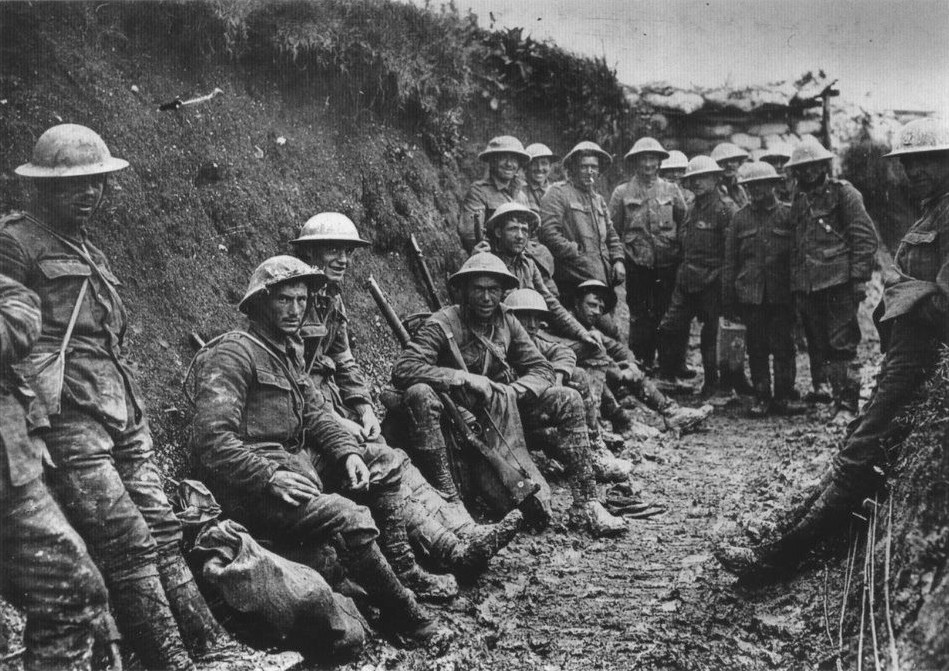
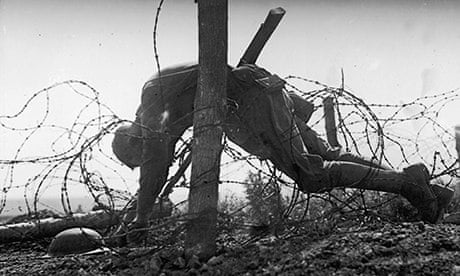
It is curious how war have been constantly defended by different nations along the history. Most of its defenders idealize war as an aggressive but necessary step that a country should face in order to rise and be seen as the most powerful and influential in front of their enemies. What they do not understand is the prices that the society is paying in order to satisfy the ego of those who desire more power in their hands instead of thinking about the well-being of their nations and the future generations.

As we can see in Dulce et Decorum Est by Wilfred Owen, the war is an event that endangers our society by perverting every part of our lives with its violence and dishonor. It perverts the soldiers' minds in the sense that its aggressiveness force our younger generations to transform themselves into monsters desirous of blood and vague glory. A topic as important as death is transformed into a trivial business that will bring honor and success to the nation and to the soldier.

What our young soldiers do not understand is that war is a situation in which glory could not exist.
One of the meanings of the word "glory" is great beauty, so we should ask ourselves: "Hey, Is there any beauty on acting as a coward and killing other to satisfy an empty conviction that will bring power to a few and suffering and pain to thousands? Is there any satisfaction on dying in a trench while others has sent you to die to a place far away from your home? And why? For your country? The same notion of "country" that has perverted the technologies by inciting scientists to create weapons and use science in order to kill others? Is that the same country that have let your friends and family die in the trenches?

The nation cannot erase memory, it cannot remove from our minds those visions of violence that war implies. The only event of being in war is synonym of dishonor, death and trauma. How can a nation rise if the hands and minds of their population are bloodstained?
War is not sweet, it taste as blood. War is not right, it is the inhuman.


References:
Owen, W. (1920) Dulce et Decorum Est.

-http://www.enotes.com/topics/dulce-et-decorum-est/in-depth
http://www.articlemyriad.com/analysis-dolce-decorum/

Analysis of "Anthem For Doomed Youth" by Wilfred Owen


Before taking the course "Contemporary Literature", I used think that poetry was just about love with all its faces. However, when we started studying the unit 2, Wilfred Owen's poems -that 
are "certainly the finest written by any English poet of the First War" (Day Lewis, 1963) - made me realize how wrong I was. Poetry can be heartbreakingly illustrative and Owen knew how to highlights the horrors of a war and the terrible events that he and his fellows faced. This heartrending topic was the reason why I decided to briefly analyze another of his poems, which talks about the death of the soldiers in the war. 
 

(You can listen the poem read by Stephen Fry)

"Anthem For Doomed Youth" 
What passing-bells for these who die as cattle? Only the monstrous anger of the guns. Only the stuttering rifles' rapid rattle Can patter out their hasty orisons. No mockeries now for them; no prayers nor bells, Nor any voice of mourning save the choirs, - The shrill, demented choirs of wailing shells; And bugles calling for them from sad shires.  
What candles may be held to speed them all? Not in the hands of boys, but in their eyes Shall shine the holy glimmers of goodbyes. The pallor of girls' brows shall be their pall; Their flowers the tenderness of patient minds, And each slow dusk a drawing down of blinds. 


The title gives us the first cue to know what this poem is about. It could be infer that by using the word "anthem", Owen is trying to commemorate the lives of casualties in the war. So, ¿who are the "doomed youth"? The doomed youth are "the future of the nation", all those young soldiers that were convinced that fighting in the war for their countries was the most honorable act of patriotism. They were promised glory and acknowledgment, however, the only thing that many of them received was just a dreadful death.   
In this poem, Owen seems to do a complain for how casualties' deaths are commemorated. 

As we have seen in movies or read in books, in most of the cases, the soldiers' bodies are never given back to their families, sometimes, because these have not been found or just because it would be horrible to give a wife or a mother the mutilated body (or parts of it) of her husband or son. Thereby, their only passing-bells were the deafening noise of the gunshots and their souls were deprived from the funerals and prayers of their loved ones, with no pall and no flowers, just lying on mud among their dead fellows.  

As Day Lewis said (1963) this poetry is not about heroes, "nor is it about deeds, or lands, nor anything about glory, honor, might, majesty, dominion, or power, except War." Thus, this poem is one more image that Owen give us about the horrors of the War and how these "men of glory" were forgotten in the battlefield, being remembered just by their loved ones, but not by their countries.

I hope you liked my entry and if you want you can leave your comments below :)

References 

BBC POETRY - Unknown author. Retieved from http://www.bbc.co.uk/poetryseason/poems/anthem_for_doomed_youth.shtml
The Collected Poems of Wilfred Owen, edited by C. Day Lewis (1963)